



Yarrow
Achillea millefolium
Wound-closer, boundary-keeper, herb of Achilles.
Yarrow grows where things have been broken—roadsides, field edges, places where the soil has been turned. It is not tender. It does not ask for care.
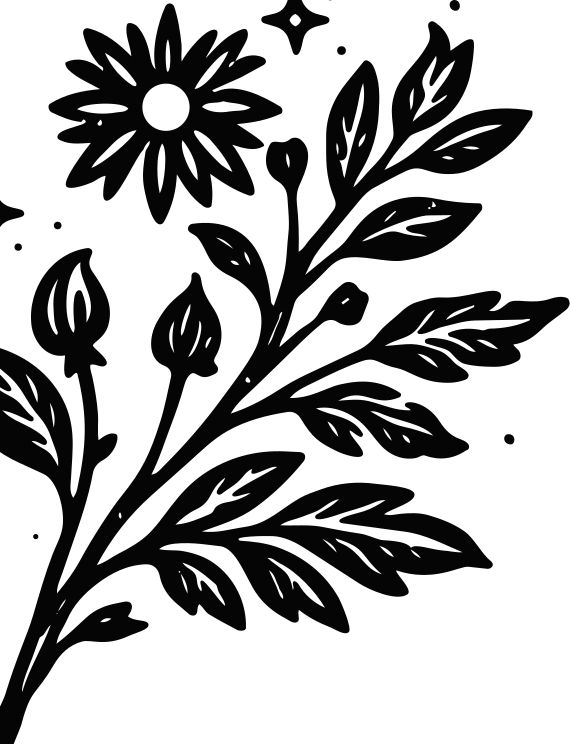
The leaves are feathery, finely divided into thousands of tiny segments (thus millefolium, thousand-leaf). The flowers form flat-topped clusters, usually white, sometimes pink, and bloom from midsummer into autumn. Crush a leaf and smell it: camphor and green pepper, sharp and medicinal. This is a plant that announces itself.
Lore
The old names tell yarrow’s story: soldier’s woundwort, staunchweed, nosebleed, knight’s milfoil, devil’s nettle. It has been used to stop bleeding for as long as people have been bleeding. Legend says Achilles used it to treat his soldiers’ wounds at Troy—hence Achillea.
But yarrow cuts both ways. The same plant that closes wounds was used to cause nosebleeds, a folk method for relieving headaches and, some said, for inducing visions. In the Scottish Highlands, a leaf held against the eyes was thought to grant second sight. In China, dried yarrow stalks were (and still are) used to cast the I Ching.
This is yarrow’s nature: it works boundaries. It closes what should be closed. It opens what should be opened. It does not choose for you—it sharpens the edge you’re already holding.
In Practice
Yarrow tea before divination, to sharpen the sight.
Yarrow at the threshold, to keep what should stay out.
Yarrow in the hand when you must say no and mean it.
The simplest practice: find yarrow growing wild. Learn to recognize it—the feathered leaves, the flat flower heads, the smell when crushed. Once you can find it without looking, you’ll start noticing how often it appears in places of transition. Field edges. Roadsides. The margins.
Notes
The leaves, crushed fresh, can actually help stop minor bleeding—this isn’t just folklore. The flowers dry well and hold their shape for months. A single plant, left undisturbed, will hold its ground for years and spread slowly outward. Yarrow doesn’t invade; it persists.